
In collaboration with Eqvista: equity management and 409A valuations for startups.
You’ve finally reached a milestone. Your startup is ready to make its first key hire. You’re prepared to offer stock options to attract top talent without draining scarce cash. As the conversation turns from role to salary and equity, a critical question often stops founders in their tracks: “When was your last 409A valuation?”
This scenario plays out in startups nationwide, yet many founders remain unclear about when 409A valuations are actually required. Understanding when a 409A valuation is needed, and why timing matters, helps you avoid costly tax issues for employees, compliance problems during fundraising, and delays in M&A transactions.
Why Timing Matters for 409A Valuations
409A valuations aren’t one-and-done compliance exercises. The IRS expects updated valuations when material changes occur, and what counts as “material” is where founders often get tripped up.
Miss a trigger, and you can expose employees to immediate taxation (ordinary income tax plus an additional penalty tax, with interest calculated from the vesting date). Beyond the tax implications, outdated valuations create diligence red flags that investors and acquirers scrutinize closely.
In Eqvista’s experience working with hundreds of startups across stages:
- Companies without current 409A valuations face challenges during investor and acquirer due diligence
- Outdated 409A valuations often delay M&A closings by several weeks
- Startups frequently request rush valuations under tight deadlines: reactive rather than proactive planning
- Many companies miss their 12-month refresh deadline, creating unnecessary compliance risk
Where 409A Connects to Legal & Finance
409A valuations intersect with several critical legal and financial areas:
- Corporate formation, where equity structures are established for the first time
- Venture capital financing rounds, when option pricing and capitalization tables come under scrutiny
- Mergers and acquisitions, where historical equity pricing is reviewed during due diligence
On the LegalMente AI side, founders often hit these same moments when they are setting up option plans, reviewing equity documents, or asking Para™ how a financing or hire affects their cap table. Valuation timing and the legal paperwork need to move together.
Understanding Safe Harbor Protection
Before looking at triggers, it’s important to understand safe harbor protection. When a 409A valuation is performed by an independent, qualified appraiser using appropriate valuation methods, the IRS generally accepts its credibility. That protection helps shield both your company and your employees from IRS challenges, but only if your valuation is current and obtained under proper procedures.
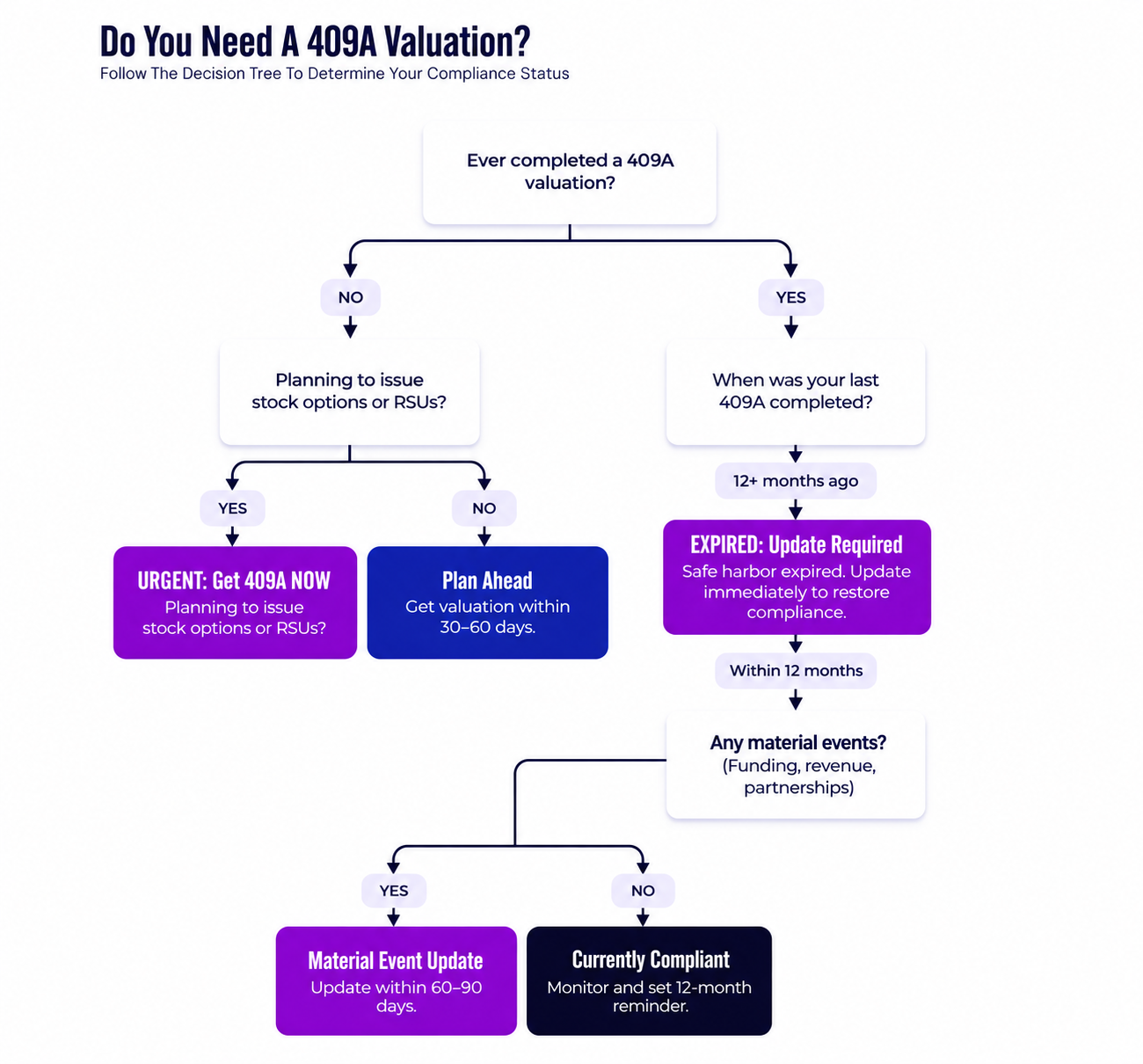
Safe harbor protection expires when material events occur or after 12 months, whichever comes first. Once expired, you’re operating without this protective presumption.
When You Must Get a 409A Valuation
1. First Equity Grant to Employees
Timing: Before issuing first stock options or RSUs.
The IRS requires companies to determine fair market value (FMV) before issuing equity compensation. Without a 409A valuation, vested compensation can become immediately taxable, and employees may face a 20% penalty plus interest on unpaid taxes.
This obligation is often triggered when the first employee stock option plan is implemented, or during initial corporate setup.
2. After Material Events (Typically Within 60-90 Days)
Material events invalidate your previous 409A valuation and safe harbor protection. While there’s no single IRS-mandated deadline, industry best practice is to complete an updated valuation within 60-90 days. More importantly, pause new equity grants until the update is complete so you don’t expose employees to tax penalties.
Funding rounds
When investors price your equity in a priced round, your previous 409A is no longer useful. A Series A that resets pre-money valuation establishes a new floor for common stock FMV. Common stock valuations often increase after funding, though the change varies with round structure, liquidation preferences, and company-specific facts.
Revenue inflection points
Crossing meaningful thresholds can signal you’ve moved from “promising startup” to “proven business model.” Examples that commonly trigger updates include:
- First $1M ARR (or other milestones that validate product-market fit)
- Achieving profitability (reduces existential risk premium)
- Sustained high growth (for example, triple-digit year-over-year growth over multiple quarters)
Product & market expansion
Launching a second product line typically triggers an update only if it opens a significantly larger addressable market or diversifies revenue concentration risk. Ask: does this make the company materially less risky, or more valuable to an acquirer?
Often material: a B2B software company launching a consumer product, or a new line generating a meaningful share of revenue (for example, 20%+).
Often not material: feature releases within an existing product or incremental improvements.
Strategic collaborations
Not every collaboration triggers a new valuation. Standard co-marketing agreements rarely qualify. Examples that more often qualify as material include:
- Enterprise contracts representing a substantial portion of projected annual revenue (for example, >20%)
- Exclusive collaborations with industry incumbents that create competitive moats
- Technology licensing deals that create new revenue streams
Leadership changes
Material leadership changes can include C-suite additions with relevant scale experience (for example, a CFO from a public company, or a VP Sales who has scaled ARR meaningfully) or board additions with significant domain expertise: signals that reduce execution risk or show fundraising readiness.
3. The 12-Month Refresh
Timing: Every 12 months, regardless of material events.
Even if nothing major has changed, IRS safe-harbor protection expires after 12 months. Many startups overlook this requirement and assume stability means no update is needed. Letting a 409A lapse creates compliance risk and can complicate future fundraising or M&A.
The Cost of Waiting
Having provided valuation insights across a large base of private companies, Eqvista sees recurring patterns when founders delay 409A work:
- Last-minute “rush” valuation requests
- Missed refresh deadlines that force compressed timelines
- Lost or delayed 83(b) election opportunities tied to valuation timing
- More time spent answering investor diligence questions when valuation gaps exist
Plan 409A Timing Into Your Equity Workflow
Every delayed 409A valuation creates risk: tax exposure for employees, red flags in diligence, and bottlenecks in M&A. Companies that navigate equity compensation well don’t wait for urgent deadlines. They build valuation updates into planning from day one, alongside the legal steps that usually travel with them (option plans, grant docs, and related filings).
Practical checklist:
- Schedule your initial 409A before issuing the first equity grants
- Set calendar reminders for your 12-month refresh
- Establish a process to identify and respond to material events
- Partner with a valuation provider who delivers both accuracy and speed
- Keep your legal and valuation workflows aligned so grants and docs don’t outrun a current FMV
Get started:
- Register for a free Eqvista account
- Start a 409A valuation
- Read the collaboration overview on our Eqvista page, or sign up for LegalMente and ask Para™ about equity docs and option plans
This article is for educational purposes and is not legal, tax, or financial advice. Speak with qualified counsel and advisors about your specific situation.